
News
Nigeria’s real estate market: What to expect in 2025

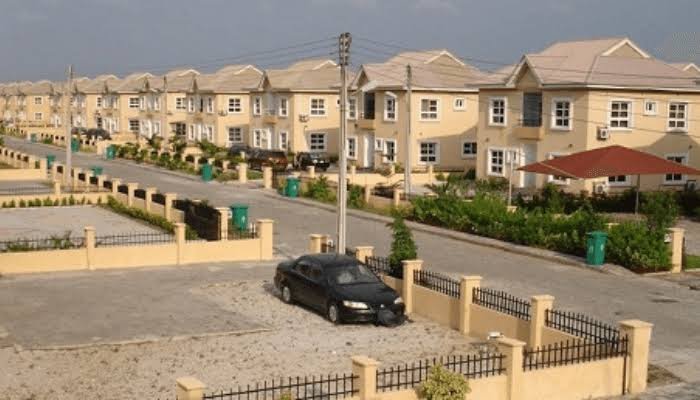
Nigeria’s real estate market: What to expect in 2025
The past year ended with 33% headline inflation and over 200% loss in the Naira value in the last 24 months.
What is happening in Nigeria’s real estate market? Are prices going up or down? Is Lagos still a hotspot for foreign investors? How is Nigeria’s government impacting real estate policies and taxes in 2025?
These are the questions everyone is asking us every day—professionals, buyers, and sellers alike, from Abuja to Port Harcourt and beyond.
Nigeria’s real estate market is one of the most dynamic in Africa. It is driven by a high population growth and a rapid urbanization. The real estate sector had a growth projection of 7.24% in 2024, amounting to a value of $2.14 trillion. By maintaining a similar trajectory, the demand for real estate, particularly in key cities will remain high.
Success in the Nigeria Real Estate would require more than just capital. It will require a careful understanding of the market, good timing, strategic thinking and partnerships that work. Let’s go through a number of things to expect this year 2025.
Boom in residential buildings
Nigeria is staying true to the global trend of rising residential demand. The scale and evolution are unprecedented, ranging from luxury towers to stretched-out villas, multi-family developments and new town projects and more.
This isn’t just about homes — developers have perfected alternative products such as Site and Services, Shell and Core, and Gated community schemes. These create distinct opportunities for increased profitability in real estate business without the necessity to inject more funds.
The driving forces will be Diaspora remittance and urbanization
Many residential buildings will be funded by Nigerians abroad. Due to their unique experience and exposure to luxury we should expect more creative housing delivery solutions to emerge. Internationally branded residences will debut in Lagos, Abuja and some other parts of the country.
Inflation and devaluation: Challenge meets opportunity
The sudden increase in local inflation and foreign exchange levels dominated industry discussions last year. This was bad news for many investors. Yet within these challenges lie a greatest investment opportunity. Just as water always finds its path, consumers will always make ends meet. The exit of many foreign companies has created some investment opportunities.
Health, education and leisure tourism are poised to experience a domestic resurgence. There is likely to be a surge in acquisitions, upgrades and strategic partnerships to develop hospitals, schools, apartments and leisure centres targeted at demand that typically gets this service abroad. The value of naira will consequently improve.
Infrastructure will ease business
The access to infrastructure (especially energy and transportation) will clearly determine the preferred location of factories and industrial parks. This will continue to keep most activities and supply traffic for development concentrated in the old industrial hubs.
SEZs (Special Economic Zones) will remain the popular destinations for new investments. The Lagos Free Zone (Tolaram), Eko Atlantic City, Alaro City and others are at the forefront of these trends. These Public-Private Partnerships (PPPs) are present conditions that reduce the initial risk and challenges of real estate investment and the cost of navigating the complex regulatory environment.
Business operators will seek for stability, reduced operational cost and a shock-proof supply chain more than ever to remain profitable amidst competition.
Facilities management: Rise of property technology
Facilities Management & Maintenance will stand out as an important currency for the property industry. With over 6.9 million sq. ft. of prime offices and retail stock and as the cost of newer buildings sky-rocket, how to maintain older infrastructure will become a significant competitive factor. A well maintained infrastructure will retain its economic value throughout its lifetime.
Despite the economic challenges there is a growing appetite of property end-users for experiential amenities, luxury and class. This will compel investors to prioritize maintaining highly functional services.
Stricter building regulations will raise construction costs, affecting property prices
As a result of the high incidence of building failures experienced in 2024 there will be stricter building regulations in some major cities in the country. These stricter measures will make our houses safer but more expensive.
The price of steel rods, which are essential materials for construction, has gone up. This isn’t just a random spike; it’s partly because builders now have to meet new, tougher standards. When materials cost more, developers don’t just absorb the hit—they pass it on to buyers. So, if you’re looking to buy, expect to see property prices rise as a result.
It is not just materials that are getting pricier. Stricter rules from building regulators will also mean higher operational costs for construction companies. Think about skilled labour and transportation—both are getting more expensive, thanks to factors like exchange rates and inflation. The depreciation of the naira over that of its fellow West African countries has led to the exit of many expatriate semi-skilled building professionals (carpenters, masons etc.). All these factors combined will push property prices up. The federal government has however embarked on massive training of these artisans to cushion this effect.
Abuja under the current government is buzzing with new infrastructure projects, thanks to a boost in government spending. The federal government has approved a total of N159.5 billion for five major projects aimed at enhancing road networks, transportation, and estate access across the Federal Capital Territory (FCT
In 2023, the Federal Capital Executive Council gave the green light to contracts worth N33.24 billion for key projects, focusing on transportation and housing. These developments are set to transform the city, making it more appealing for both residents and businesses. One of the standout projects is the Abuja/Kaduna/Zaria/Kano road rehabilitation, which is expected to be completed by 2025. This road will significantly enhance connectivity, making travel smoother and faster.
With better roads and transport, Abuja will become a hotspot for property seekers. The demand for homes and commercial spaces will rise, driven by factors like population growth and urbanization.
The government’s focus on these improvements will attract more people and businesses to the Abuja and its neighbourhood. This influx is expected to continue pushing property prices upward, making it a good investment destination.
Trump policies
Economic experts think that Trump’s policies will be consistent with strengthening the US economy, having a stronger dollar and maintaining continued strength in US equities. Without doubt, I expect general economic activities to increase in the US as he would likely borrow more and increase government spending.
However, there will be two potential impacts on Nigerians living in the US. If US residential prices increase, they would likely spend their excess income on acquiring more real estate in the US as opposed to investing in Nigeria. On the flip side, Trump’s insistence on deportation of illegal immigrants may see some Nigerians returning home to invest their savings and start all over again. There is no place like home.
But prices aren’t coming down
Property prices are not going to come down in 2025. The provision of cheaper mortgages, reduced interest rates, availability of funding will still take a few years before it can start to significantly affect real estate prices. Demand is still too strong and far ahead of supply due to increased urbanization. Limited infrastructure in areas people want to live, and slow and inadequate supply of new homes in these areas would continue to marginally push property prices up this year or at best, keep it stable.
The Gen Xers are coming back home
Nigerians living abroad who are already in their 50s/60s are likely going to start the wave of ‘Japada’ not just due to the return of Trump to the White House, but also as they are now empty nesters and have excess cash. They will be looking for retirement estates, homes to live in. Homes in Nigeria would become more affordable and attractive to them. Location, security, neighbourhood infrastructure and functionality of the homes in terms of services and spaces will guide their decision on which estate to buy into.
•Okonkwo is an educator and entrepreneur. -culled from – (Nation)

Adron Group Chairman Celebrates Business Icon Otunba Muraina Banjoko at 65 (more…)
News
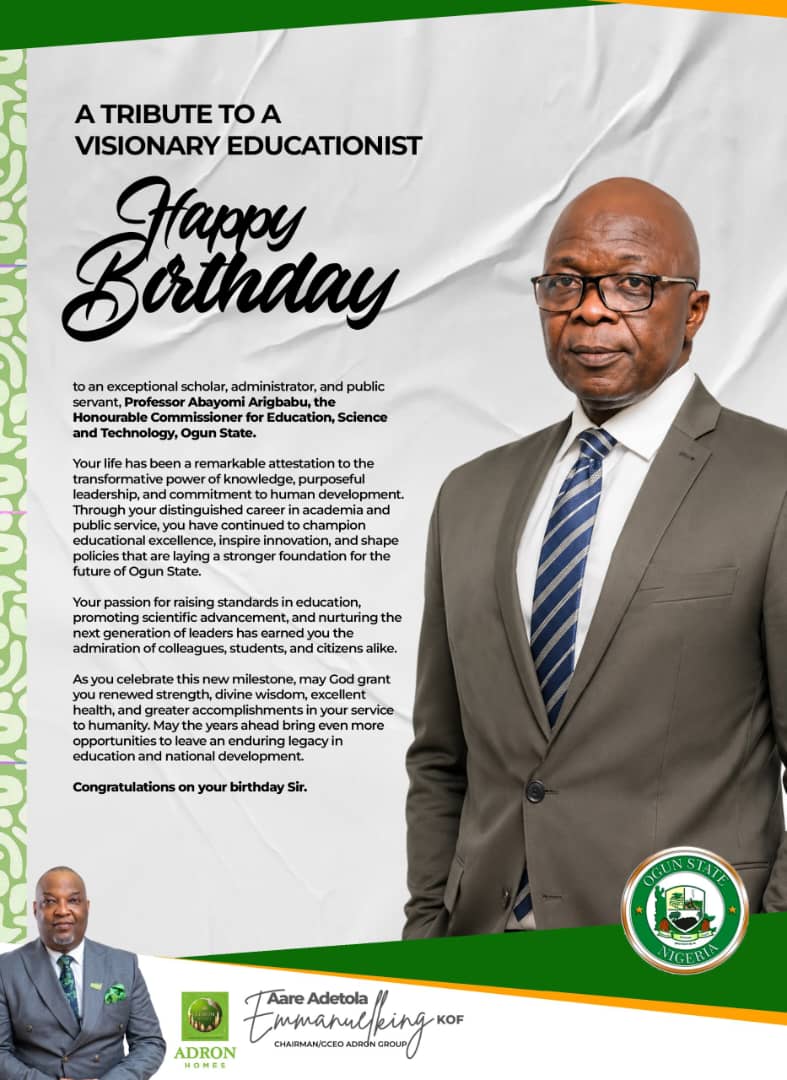
Aare Adetola Emmanuelking Hails Prof. Abayomi Arigbabu’s Impact on Education as He Marks Birthday
Aare Adetola Emmanuelking Hails Prof. Abayomi Arigbabu’s Impact on Education as He Marks Birthday
The Chairman/GCEO of Adron Group, Aare Adetola Emmanuelking, has paid glowing tribute to the Honourable Commissioner for Education, Science and Technology, Ogun State, Professor Abayomi Arigbabu, describing him as one of the foremost architects of educational transformation whose leadership continues to redefine learning and human capital development in the Gateway State.
In a heartfelt birthday message, the renowned real estate entrepreneur commended Professor Arigbabu for his exceptional blend of scholarship, administrative excellence, and visionary public service, noting that his stewardship of the education sector has continued to inspire confidence in the future of education in Ogun State.
According to Aare Adetola Emmanuelking, Professor Arigbabu has distinguished himself as an education reformer whose policies and programmes have consistently advanced academic excellence, strengthened institutional standards, promoted innovation, and positioned education as a strategic driver of sustainable development.
“Professor Abayomi Arigbabu exemplifies the ideals of visionary leadership. His dedication to improving educational outcomes and empowering the next generation through quality learning continues to leave an indelible mark on Ogun State and Nigeria as a whole. His legacy is one of impact, excellence, and selfless service,” he stated.
The Adron Group Chairman further acknowledged the Commissioner’s commitment to building an education system that equips young people with the knowledge, skills, and values required to thrive in an increasingly dynamic world, describing his contributions as invaluable to the state’s development agenda.
As Professor Arigbabu marks another year, Aare Adetola Emmanuelking prayed for renewed strength, divine wisdom, robust health, and greater accomplishments, expressing confidence that the celebrant’s passion for educational advancement would continue to shape lives and inspire generations.
He wished the Commissioner a memorable birthday celebration and many more years of impactful service to Ogun State, Nigeria, and humanity.
News
RSS Makes History as Graduating Class of 2026 Marks Valedictory Service in First-of-Its-Kind University-Style Ceremony

RSS Makes History as Graduating Class of 2026 Marks Valedictory Service in First-of-Its-Kind University-Style Ceremony
Remo Secondary School (RSS) has made history with the graduation of its 2026 class in what is being described as a groundbreaking academic ceremony, as the prestigious public secondary school celebrated its graduating students in a university-themed graduation style.
The historic valedictory service, which brought together students, parents, teachers, school administrators, old students and distinguished guests, was marked by pomp, pageantry and an atmosphere of academic excellence, as graduating students appeared in full academic graduation gowns, caps and other traditional graduation regalia.
In a striking departure from conventional valedictory ceremonies typically held in public secondary schools, the school’s principals and teachers, as well as the National Executives of the Remo Secondary School Old Students’ Association (RSSOSA), also donned academic gowns, creating the atmosphere and grandeur of a university convocation.
The remarkable initiative transformed the valedictory service into a memorable graduation experience for the students and marked a significant milestone in the history of Remo Secondary School, Ogun State and, potentially, the Nigerian public school system.
The ceremony was not only a celebration of the completion of secondary education, but also a deliberate effort to instil in the graduating students a sense of pride, achievement and responsibility as they prepare to transition into higher education and the next phase of their lives.
Another major highlight of the ceremony was the presentation of awards to deserving students in recognition of outstanding morals, good character and exemplary conduct. The awards, which cut across various categories, celebrated students who distinguished themselves not only through academic pursuits, but also through positive character traits, discipline, responsibility and good morals.
In a further demonstration of its commitment to the future of the graduating students and the advancement of education, Hope Bridge Social Impact Foundation awarded full higher education scholarships to about 25 deserving students. The scholarship awards will support the beneficiaries in pursuing their tertiary education, providing them with an opportunity to further their academic aspirations and achieve their full potential.
Speaking at the ceremony, the President of the Remo Secondary School Old Students’ Association (RSSOSA), Sir Aare Adetola Emmanuelking KOF, congratulated the graduating class and commended the school management, teachers and parents for their roles in nurturing and guiding the students throughout their academic journey.
He further expressed appreciation to the Ogun State Government, ably led by the Executive Governor, His Excellency, Prince Dapo Abiodun, MFR, CON, for his administration’s commitment to transforming the education sector in the state.
He specifically acknowledged the Governor’s Yellow Revolution initiative, describing it as one of the notable interventions that has positively impacted the education sector and contributed to creating a more conducive environment for learning across public schools in Ogun State.
According to him, the Governor’s keen attention to education and the deliberate interventions of his administration have had a positive ripple effect that has extended to institutions such as Remo Secondary School, contributing to the school’s continued growth and development and helping to position it as a great institution.
Aare Adetola Emmanuelking also extended his appreciation to the Ogun State Commissioner for Education, Science and Technology, Prof. Abayomi Arigbabu, for his leadership and evident contributions to the advancement of education in the state.
The event further highlighted the strong bond between the school and its old students, with the presence and participation of the old students, demonstrating the association’s continued commitment to the development and advancement of the institution.
The innovative university-style graduation ceremony is expected to remain one of the most memorable moments in the history of the school, and could set a new standard for how graduating students are celebrated in public secondary schools across Ogun State and beyond.
For the graduating class of 2026, the occasion was a day of pride, gratitude and celebration, a day when they were not only bid farewell from secondary school, but were honoured and celebrated as graduates stepping confidently into the future.

-
 Real Estate Achievers Awards1 year ago
Real Estate Achievers Awards and Exhibition 2025
-

 Mortgage finance1 year ago
Comparing Nigerian Mortgage Structures to Global Standards mortgage
-
 News1 year ago
RERAPAN Celebrates Babatunde Adeyemo at 46
-
 Interviews2 years ago
Google hit with record EU fine over Shopping service
-
 Opinion2 years ago
All you need to know about penalty shootouts
-
News1 year ago
Real Estate Achievers Awards and Exhibition 2025 (REAA)
-
 Real Estate insurance2 years ago
The full story of Thailand’s extraordinary cave rescue
-
 Mortgage finance1 year ago
FG to seize mortgaged property of retirees over unpaid housing loans