
News
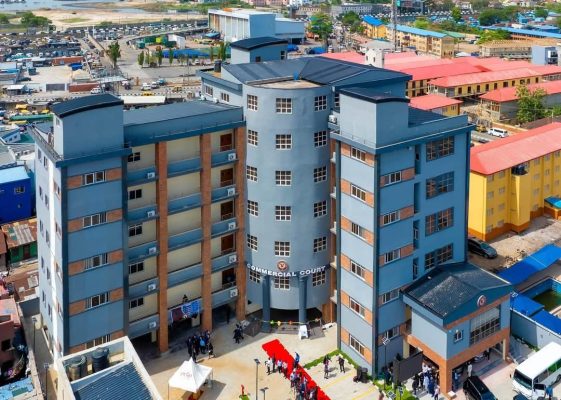
How diaspora investments are reshaping real estate market

How diaspora investments are reshaping real estate market
Nigerians in diaspora have emerged as a powerful force in the country’s real estate sector, injecting billions of naira yearly into property investments. Their contributions bring higher standards and global perspectives to local real estate practices
A growing number of Nigerians in the diaspora are investing in property back home, driven by emotional ties, rising incomes abroad, and economic uncertainty in host countries.
This trend is reshaping real estate in Nigeria, fueling a construction boom, price surges in certain urban areas, and triggering fraud and legal disputes.
The Central Bank of Nigeria (CBN) reported a significant increase in remittance inflows, reaching $553 million in July 2024, a 130 per cent increase from the corresponding period in 2023. In 2024, diaspora remittances to Nigeria reached $20.93 billion, a significant increase of 8.9 per cent year-on-year
Many remittances were channelled into real estate, as the diaspora seeks to establish a tangible presence back home, whether for retirement, family support, or as a hedge against economic uncertainties abroad.
perties, as well as Ibadan, Enugu, Benin City, Owerri, Uyo, Ilorin and Asaba – emerging cities offering affordability and lower entry thresholds, as well as appreciable returns.
Experts estimate that 70 per cent of investments in Nigeria’s real estate sector originate from the diaspora, highlighting their significant influence on the market. Over the past five years, Nigerians in the diaspora have remitted approximately $99 billion, underscoring their vital role in the nation’s economic development.
The Guardian investigation revealed that many diaspora Nigerians fall victim to scams involving fake land titles, double sales, or properties that don’t exist. Scammers often pose as agents, family members, or even developers. A UK-based Nigerian who sent funds to build a house in Enugu, only to discover that the land didn’t exist or had been resold to another buyer.
Lack of transparency in documentation processes complicates the worries of these Nigerians. Title registration and verification processes are often bureaucratic, slow, and riddled with inconsistencies across states. Buyers abroad can’t verify property ownership or development status in real-time.
Other challenges are that these investors rely on family members or acquaintances who may mismanage funds or give false updates, miscommunication, unfinished buildings, or outright theft, as well as insecurity in parts of Nigeria, especially rural or developing areas, which makes certain regions unattractive. As such, investors stick to “safe zones,” driving up prices in cities like Lagos and Abuja.
Amid the uncertainty and frustration, a new wave of platforms, legal reforms, and tech-driven real estate firms is working to rebuild trust with Nigeria’s diaspora. These solutions aim to offer transparency, accountability, and convenience—critical tools for anyone investing from thousands of miles away.
For instance, platforms are curating listings with verified titles and developer credentials. Some even offer video walk-throughs, digital documentation, and escrow services that hold funds until certain project milestones are met.
Startups are using blockchain technology to digitise and secure land title records, starting with pilot projects in states like Lagos and Oyo. This innovation makes it easier for diaspora investors to confirm land ownership remotely and reduces the risk of fraud.
Firms now offer diaspora-exclusive packages such as flexible payment plans, construction progress monitoring via apps or video updates and delivery guarantees and legal representation for non-resident buyers. Some developers even conduct property road shows in the UK, US, and Canada, allowing Nigerians abroad to meet company reps and sign contracts in person.
Now, the Federal Government, tech platforms and verified developers are stepping in to restore confidence. To cater for the diverse needs of Nigerians and expand access to affordable housing, the Federal Mortgage Bank of Nigeria and Nigerians in Diaspora Commission (NiDCOM) designed the Diaspora Mortgage Loan. The initiative is expected to open opportunities for Nigerians living abroad to invest in real estate back home in Nigeria.
There are ongoing engagements between the bank, NiDCOM and the Central Bank of Nigeria (CBN) aimed at ensuring seamless transaction processes. International Money Transfer Operators (IMTOs) are also being engaged to facilitate smooth transactions, with plans for a full rollout of the product this year.
Related News
Human trafficking: Ghana hands over 231 rescued Nigerians to NiDCOM, NAPTIP
CBN targets reduction in transaction costs with PAPSS
Naira redesign: Court strikes out N1b suit against Buhari, Emefiele, CBN
Experts urged the Federal Government to work to attract more foreign investment, while safeguarding the interests of its diaspora should be a national priority, not just for real estate, but for long-term economic development.
They called for a stronger legal protection, streamlined land registration, and widespread digital verification, as well as smart platforms and transparent developers to end heartbreak in real estate investments.
The Chairman, Lagos branch of the Nigerian Institution of Estate Surveyors and Valuers (NIESV), Mr Gbenga Ismail, admitted that Foreign Direct Investments (FDI), especially from Nigerians in the diaspora, contribute significantly to inflows in real estate.
According to him, the development has increased housing development, especially in urban and semi-urban areas, with a focus on mid- to high-end properties, enabling the rise of real estate tech platforms: Platforms offering virtual tours, online purchases, and escrow services cater to diaspora investors.
It has also improved building standards: Diaspora demands for quality and transparency have influenced developers to adopt better construction practices, boost GDP and employment: construction and related industries benefit from increased demand.
He disclosed that that the investors are motivated by the desire to own property back home, investment opportunities – high returns compared to markets abroad, retirement planning – building or buying homes to return to, family support – providing shelter for relatives or generating rental income and weakened naira – encourages conversion of foreign earnings into real assets.
To curb the risk associated with such investments, Ismail advocated the use of escrow services and verified developers, ensuring funds are only released when project milestones are met, and title verification – Partnering with professionals to verify property documents before purchase.
Other suggestions he made include investment through structured real estate funds or diaspora investment platforms, providing oversight and legal protection, government regulation and incentives, encouraging diaspora-friendly policies and easing land titling processes and the use of digital platforms, promoting transparency through tech tools that allow real-time project tracking and remote property management.
The Chairman, NIESV, Anambra State Branch, Raji Adewale, said the influx of FDI has profoundly redefined the contours of the nation’s real estate ecosystem. “These capital inflows have not only augmented liquidity within the sector but have also ushered in global best practices, modern architectural standards, and an enhanced appetite for structured developments.
“The sector has witnessed a proliferation of high-end residential estates, premium office complexes, and mixed-use developments, particularly in urban epicentres. This renaissance has spurred infrastructural expansion, elevated professional service standards, and bolstered investor confidence, thereby repositioning the real estate market as a cornerstone of national economic growth,” he said.
Adewale noted that motives underpinning diaspora investments are both sentimental and strategic, such as hedging against inflation and currency volatility, the desire to bequeath tangible wealth to descendants, and superior return on investment compared to stagnating overseas markets. He added that enhanced institutional frameworks like improvements in land administration, digital registries, and diaspora-targeted policies have instilled greater confidence.
He called on the government to sanitise the terrain and engender sustainable diaspora participation through digitisation of land records, establishing regulated Real Estate Investment Trusts (REITs), and enforcement of professional ethics to eliminate quackery, as well as accelerated judicial processes to expedite dispute resolution.
“The ascendancy of diaspora investments in Nigeria’s real estate sector is not merely a financial trend—it is a transformative force. With the right safeguards, institutional reforms, and strategic foresight, this capital can serve as a linchpin for sustainable urban development, national economic rejuvenation, and generational wealth creation,” Adewale added.
Former president of the African Chapter of the International Real Estate Federation (FIABCI), Mr Chudi Ubosi, said there has always been interest by corporate investors like the Rendevour in Alaro City in the FTZE in Lagos, but the greatest interest has been from citizens in the diaspora. “The greatest interest in the Nigerian real estate sector is internal. Private investors are reshaping the sector from Lagos to Abuja and nationwide.”
Ubosi explained that the challenges of those investments for companies are usually the inability to repatriate profits, security of investment and a couple of other environmental issues like poor electricity supply. “The risks of investment in Nigeria can be ameliorated purely by good governance and the provision of an enabling environment for businesses to thrive,” he said.

Adron Group Chairman Celebrates Business Icon Otunba Muraina Banjoko at 65 (more…)
News
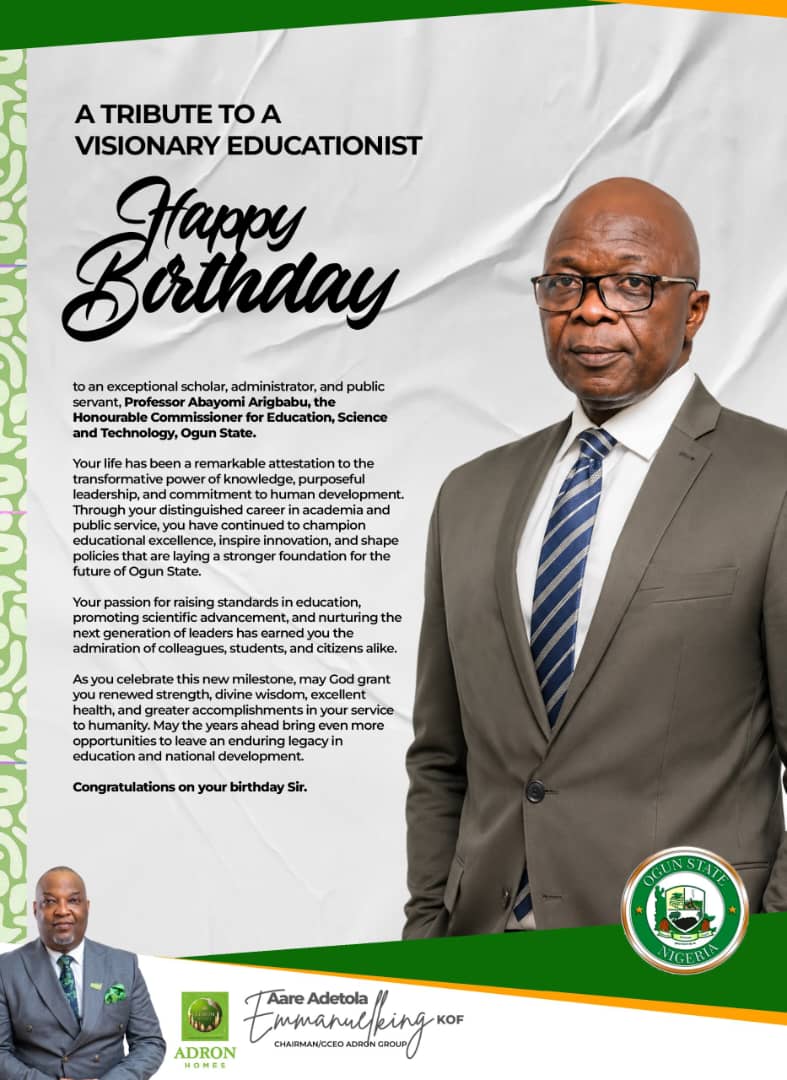
Aare Adetola Emmanuelking Hails Prof. Abayomi Arigbabu’s Impact on Education as He Marks Birthday
Aare Adetola Emmanuelking Hails Prof. Abayomi Arigbabu’s Impact on Education as He Marks Birthday
The Chairman/GCEO of Adron Group, Aare Adetola Emmanuelking, has paid glowing tribute to the Honourable Commissioner for Education, Science and Technology, Ogun State, Professor Abayomi Arigbabu, describing him as one of the foremost architects of educational transformation whose leadership continues to redefine learning and human capital development in the Gateway State.
In a heartfelt birthday message, the renowned real estate entrepreneur commended Professor Arigbabu for his exceptional blend of scholarship, administrative excellence, and visionary public service, noting that his stewardship of the education sector has continued to inspire confidence in the future of education in Ogun State.
According to Aare Adetola Emmanuelking, Professor Arigbabu has distinguished himself as an education reformer whose policies and programmes have consistently advanced academic excellence, strengthened institutional standards, promoted innovation, and positioned education as a strategic driver of sustainable development.
“Professor Abayomi Arigbabu exemplifies the ideals of visionary leadership. His dedication to improving educational outcomes and empowering the next generation through quality learning continues to leave an indelible mark on Ogun State and Nigeria as a whole. His legacy is one of impact, excellence, and selfless service,” he stated.
The Adron Group Chairman further acknowledged the Commissioner’s commitment to building an education system that equips young people with the knowledge, skills, and values required to thrive in an increasingly dynamic world, describing his contributions as invaluable to the state’s development agenda.
As Professor Arigbabu marks another year, Aare Adetola Emmanuelking prayed for renewed strength, divine wisdom, robust health, and greater accomplishments, expressing confidence that the celebrant’s passion for educational advancement would continue to shape lives and inspire generations.
He wished the Commissioner a memorable birthday celebration and many more years of impactful service to Ogun State, Nigeria, and humanity.
News
RSS Makes History as Graduating Class of 2026 Marks Valedictory Service in First-of-Its-Kind University-Style Ceremony

RSS Makes History as Graduating Class of 2026 Marks Valedictory Service in First-of-Its-Kind University-Style Ceremony
Remo Secondary School (RSS) has made history with the graduation of its 2026 class in what is being described as a groundbreaking academic ceremony, as the prestigious public secondary school celebrated its graduating students in a university-themed graduation style.
The historic valedictory service, which brought together students, parents, teachers, school administrators, old students and distinguished guests, was marked by pomp, pageantry and an atmosphere of academic excellence, as graduating students appeared in full academic graduation gowns, caps and other traditional graduation regalia.
In a striking departure from conventional valedictory ceremonies typically held in public secondary schools, the school’s principals and teachers, as well as the National Executives of the Remo Secondary School Old Students’ Association (RSSOSA), also donned academic gowns, creating the atmosphere and grandeur of a university convocation.
The remarkable initiative transformed the valedictory service into a memorable graduation experience for the students and marked a significant milestone in the history of Remo Secondary School, Ogun State and, potentially, the Nigerian public school system.
The ceremony was not only a celebration of the completion of secondary education, but also a deliberate effort to instil in the graduating students a sense of pride, achievement and responsibility as they prepare to transition into higher education and the next phase of their lives.
Another major highlight of the ceremony was the presentation of awards to deserving students in recognition of outstanding morals, good character and exemplary conduct. The awards, which cut across various categories, celebrated students who distinguished themselves not only through academic pursuits, but also through positive character traits, discipline, responsibility and good morals.
In a further demonstration of its commitment to the future of the graduating students and the advancement of education, Hope Bridge Social Impact Foundation awarded full higher education scholarships to about 25 deserving students. The scholarship awards will support the beneficiaries in pursuing their tertiary education, providing them with an opportunity to further their academic aspirations and achieve their full potential.
Speaking at the ceremony, the President of the Remo Secondary School Old Students’ Association (RSSOSA), Sir Aare Adetola Emmanuelking KOF, congratulated the graduating class and commended the school management, teachers and parents for their roles in nurturing and guiding the students throughout their academic journey.
He further expressed appreciation to the Ogun State Government, ably led by the Executive Governor, His Excellency, Prince Dapo Abiodun, MFR, CON, for his administration’s commitment to transforming the education sector in the state.
He specifically acknowledged the Governor’s Yellow Revolution initiative, describing it as one of the notable interventions that has positively impacted the education sector and contributed to creating a more conducive environment for learning across public schools in Ogun State.
According to him, the Governor’s keen attention to education and the deliberate interventions of his administration have had a positive ripple effect that has extended to institutions such as Remo Secondary School, contributing to the school’s continued growth and development and helping to position it as a great institution.
Aare Adetola Emmanuelking also extended his appreciation to the Ogun State Commissioner for Education, Science and Technology, Prof. Abayomi Arigbabu, for his leadership and evident contributions to the advancement of education in the state.
The event further highlighted the strong bond between the school and its old students, with the presence and participation of the old students, demonstrating the association’s continued commitment to the development and advancement of the institution.
The innovative university-style graduation ceremony is expected to remain one of the most memorable moments in the history of the school, and could set a new standard for how graduating students are celebrated in public secondary schools across Ogun State and beyond.
For the graduating class of 2026, the occasion was a day of pride, gratitude and celebration, a day when they were not only bid farewell from secondary school, but were honoured and celebrated as graduates stepping confidently into the future.

-
 Real Estate Achievers Awards1 year ago
Real Estate Achievers Awards and Exhibition 2025
-

 Mortgage finance1 year ago
Comparing Nigerian Mortgage Structures to Global Standards mortgage
-

 News1 year ago
RERAPAN Celebrates Babatunde Adeyemo at 46
-
 Interviews2 years ago
Google hit with record EU fine over Shopping service
-
 Opinion2 years ago
All you need to know about penalty shootouts
-
News1 year ago
Real Estate Achievers Awards and Exhibition 2025 (REAA)
-
 Real Estate insurance2 years ago
The full story of Thailand’s extraordinary cave rescue
-
 Mortgage finance1 year ago
FG to seize mortgaged property of retirees over unpaid housing loans