
News
Operators seek government’s intervention over high cement cost

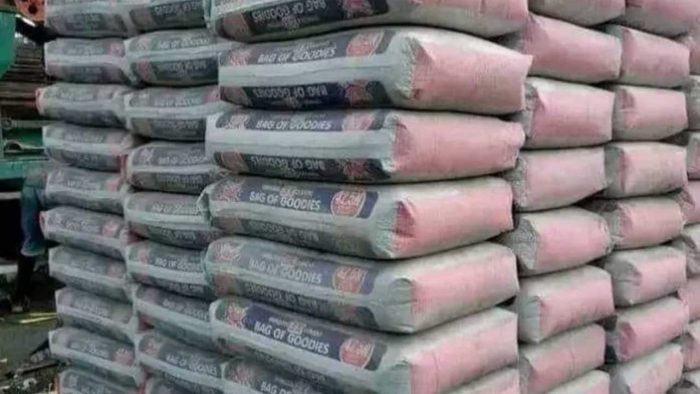
Operators seek government’s intervention over high cement cost
Towards making home ownership more accessible, operators in the building sector value chain have appealed to the Federal government to intervene over the persistent increase in the price of cement.
Cement is a critical ingredient for housing construction in Nigeria, as it determines, in no small measure, the number of houses that could be constructed over time. It performs a fundamental role in constructing foundations, floors, walls, and other structural elements, providing strength, durability, and stability.
The potency of cement is essentially hinged on its ability to bind aggregates such as sand, gravel, and others together when mixed with water, thus making it an essential component for housing construction.
However, over the years, the construction industry in Nigeria has faced challenges, as cement prices have surged to unprecedented levels. Between December 2023 and November 2024, the price of a 50kg bag of cement sold for an average of N5,000 and N8,000 in the open market.
As of April 2025, the average retail price per 50kg bag of cement ranges between N10,000 and N10,500, depending on locations and the brand.
The price of cement had in the recent past surged to N15,000 in the Federal Capital Territory (FCT), Abuja, Lagos and other Nigerian cities before stabilising between N9,500 and N10,500 per 50kg, especially for one of the leading cement manufacturers. Other brands, such as BUA, Lafarge Cement, sell at a slightly different price in the building materials market.
The cement manufacturers attributed the price increase to rising production costs triggered by inflation and transportation costs, high cost of labour, frequent disruptions in gas supplies, and high cost of maintenance for equipment.
Block manufacturers under the aegis of the National Association of Block Moulders of Nigeria (NABMON) recently called on the Federal Government to intervene with practical and urgent measures to stabilise the surge in cement price and prevent a looming construction crisis.
NABMON President, Adesegun Banjoko, lamented over the continued inaction on the part of the government regarding the persistent rise in cement prices—a trend that has ripple effects across the construction sector, housing delivery, and public infrastructure projects.
Senate halts sale of Lafarge to Chinese firm
BUA, others defy FX crisis, post over N500 billion profit
Tinubu’s reforms painful but necessary – BUA chairman
Adesegun said, “We are waiting for that pragmatic step from the government on this issue of cement prices. Just as we’ve seen conscious and deliberate efforts to stabilise the Naira and petroleum prices, similar intervention is urgently needed in the cement sector.”
Expressing worries over the development, a builder based in Lagos, Mr Ebuka Okoro, said, “It will be ideal if the price of cement can be N5,000 per 50kg. This will encourage more investors and more people to build and bridge the huge housing deficit in the country.
“The usual complaints by the producers for hikes in the price are the cost of diesel and other industrial fuels, which they say increased significantly, impacting production costs. They also attributed the increase to frequent disruptions in gas supplies, which have affected cement production.”
A Lagos-based cement seller, Michael Adeyemi, lamented that the price increase has had a devastating impact on builders and contractors, with many struggling to manage their budgets.
According to him, the high price of cement will undoubtedly affect the buying power of individuals and businesses looking to buy homes or engage in other construction projects.”
Adeyemi said the government need to address the issues contributing to unstable prices, especially high maintenance costs due to heavy-duty machinery and facilities used by producers, erratic power supply, and unfriendly government policies to stabilise the prices and support the construction industry
Towards making home ownership more accessible, operators in the building sector value chain have appealed to the Federal government to intervene over the persistent increase in the price of cement.
Cement is a critical ingredient for housing construction in Nigeria, as it determines, in no small measure, the number of houses that could be constructed over time. It performs a fundamental role in constructing foundations, floors, walls, and other structural elements, providing strength, durability, and stability.
The potency of cement is essentially hinged on its ability to bind aggregates such as sand, gravel, and others together when mixed with water, thus making it an essential component for housing construction.
However, over the years, the construction industry in Nigeria has faced challenges, as cement prices have surged to unprecedented levels. Between December 2023 and November 2024, the price of a 50kg bag of cement sold for an average of N5,000 and N8,000 in the open market.
As of April 2025, the average retail price per 50kg bag of cement ranges between N10,000 and N10,500, depending on locations and the brand.
The price of cement had in the recent past surged to N15,000 in the Federal Capital Territory (FCT), Abuja, Lagos and other Nigerian cities before stabilising between N9,500 and N10,500 per 50kg, especially for one of the leading cement manufacturers. Other brands, such as BUA, Lafarge Cement, sell at a slightly different price in the building materials market.
The cement manufacturers attributed the price increase to rising production costs triggered by inflation and transportation costs, high cost of labour, frequent disruptions in gas supplies, and high cost of maintenance for equipment.
Block manufacturers under the aegis of the National Association of Block Moulders of Nigeria (NABMON) recently called on the Federal Government to intervene with practical and urgent measures to stabilise the surge in cement price and prevent a looming construction crisis.
NABMON President, Adesegun Banjoko, lamented over the continued inaction on the part of the government regarding the persistent rise in cement prices—a trend that has ripple effects across the construction sector, housing delivery, and public infrastructure projects.
Adesegun said, “We are waiting for that pragmatic step from the government on this issue of cement prices. Just as we’ve seen conscious and deliberate efforts to stabilise the Naira and petroleum prices, similar intervention is urgently needed in the cement sector.”
Expressing worries over the development, a builder based in Lagos, Mr Ebuka Okoro, said, “It will be ideal if the price of cement can be N5,000 per 50kg. This will encourage more investors and more people to build and bridge the huge housing deficit in the country.
“The usual complaints by the producers for hikes in the price are the cost of diesel and other industrial fuels, which they say increased significantly, impacting production costs. They also attributed the increase to frequent disruptions in gas supplies, which have affected cement production.”
A Lagos-based cement seller, Michael Adeyemi, lamented that the price increase has had a devastating impact on builders and contractors, with many struggling to manage their budgets.
According to him, the high price of cement will undoubtedly affect the buying power of individuals and businesses looking to buy homes or engage in other construction projects.”
Adeyemi said the government need to address the issues contributing to unstable prices, especially high maintenance costs due to heavy-duty machinery and facilities used by producers, erratic power supply, and unfriendly government policies to stabilise the prices and support the construction industry
Although the Federal government had in the recent past met with some of the producers and appealed to them to reduce prices to N7, 000 and N8, 000 per 50kg, but retail prices continue to hover around N10, 000 and N10, 500, thereby hampering efforts at increasing the nation’s housing stocks.
The experts advocated industry-specific intervention for cement manufacturers. They suggested that the government should subsidise the production costs, invest in infrastructure that enhances manufacturers’ activities, and encourage competition in the cement sector to drive down prices.
A building contractor, Mr Obiora Alex, said, “By subsidising production costs, the government can enable cement manufacturers to reduce their prices. Investing in infrastructure can reduce transportation costs and make it easier to get cement from factories to construction sites.”

Adron Group Chairman Celebrates Business Icon Otunba Muraina Banjoko at 65 (more…)
News
Aare Adetola Emmanuelking Hails Prof. Abayomi Arigbabu’s Impact on Education as He Marks Birthday

Aare Adetola Emmanuelking Hails Prof. Abayomi Arigbabu’s Impact on Education as He Marks Birthday
The Chairman/GCEO of Adron Group, Aare Adetola Emmanuelking, has paid glowing tribute to the Honourable Commissioner for Education, Science and Technology, Ogun State, Professor Abayomi Arigbabu, describing him as one of the foremost architects of educational transformation whose leadership continues to redefine learning and human capital development in the Gateway State.
In a heartfelt birthday message, the renowned real estate entrepreneur commended Professor Arigbabu for his exceptional blend of scholarship, administrative excellence, and visionary public service, noting that his stewardship of the education sector has continued to inspire confidence in the future of education in Ogun State.
According to Aare Adetola Emmanuelking, Professor Arigbabu has distinguished himself as an education reformer whose policies and programmes have consistently advanced academic excellence, strengthened institutional standards, promoted innovation, and positioned education as a strategic driver of sustainable development.
“Professor Abayomi Arigbabu exemplifies the ideals of visionary leadership. His dedication to improving educational outcomes and empowering the next generation through quality learning continues to leave an indelible mark on Ogun State and Nigeria as a whole. His legacy is one of impact, excellence, and selfless service,” he stated.
The Adron Group Chairman further acknowledged the Commissioner’s commitment to building an education system that equips young people with the knowledge, skills, and values required to thrive in an increasingly dynamic world, describing his contributions as invaluable to the state’s development agenda.
As Professor Arigbabu marks another year, Aare Adetola Emmanuelking prayed for renewed strength, divine wisdom, robust health, and greater accomplishments, expressing confidence that the celebrant’s passion for educational advancement would continue to shape lives and inspire generations.
He wished the Commissioner a memorable birthday celebration and many more years of impactful service to Ogun State, Nigeria, and humanity.
News
RSS Makes History as Graduating Class of 2026 Marks Valedictory Service in First-of-Its-Kind University-Style Ceremony

RSS Makes History as Graduating Class of 2026 Marks Valedictory Service in First-of-Its-Kind University-Style Ceremony
Remo Secondary School (RSS) has made history with the graduation of its 2026 class in what is being described as a groundbreaking academic ceremony, as the prestigious public secondary school celebrated its graduating students in a university-themed graduation style.
The historic valedictory service, which brought together students, parents, teachers, school administrators, old students and distinguished guests, was marked by pomp, pageantry and an atmosphere of academic excellence, as graduating students appeared in full academic graduation gowns, caps and other traditional graduation regalia.
In a striking departure from conventional valedictory ceremonies typically held in public secondary schools, the school’s principals and teachers, as well as the National Executives of the Remo Secondary School Old Students’ Association (RSSOSA), also donned academic gowns, creating the atmosphere and grandeur of a university convocation.
The remarkable initiative transformed the valedictory service into a memorable graduation experience for the students and marked a significant milestone in the history of Remo Secondary School, Ogun State and, potentially, the Nigerian public school system.
The ceremony was not only a celebration of the completion of secondary education, but also a deliberate effort to instil in the graduating students a sense of pride, achievement and responsibility as they prepare to transition into higher education and the next phase of their lives.
Another major highlight of the ceremony was the presentation of awards to deserving students in recognition of outstanding morals, good character and exemplary conduct. The awards, which cut across various categories, celebrated students who distinguished themselves not only through academic pursuits, but also through positive character traits, discipline, responsibility and good morals.
In a further demonstration of its commitment to the future of the graduating students and the advancement of education, Hope Bridge Social Impact Foundation awarded full higher education scholarships to about 25 deserving students. The scholarship awards will support the beneficiaries in pursuing their tertiary education, providing them with an opportunity to further their academic aspirations and achieve their full potential.
Speaking at the ceremony, the President of the Remo Secondary School Old Students’ Association (RSSOSA), Sir Aare Adetola Emmanuelking KOF, congratulated the graduating class and commended the school management, teachers and parents for their roles in nurturing and guiding the students throughout their academic journey.
He further expressed appreciation to the Ogun State Government, ably led by the Executive Governor, His Excellency, Prince Dapo Abiodun, MFR, CON, for his administration’s commitment to transforming the education sector in the state.
He specifically acknowledged the Governor’s Yellow Revolution initiative, describing it as one of the notable interventions that has positively impacted the education sector and contributed to creating a more conducive environment for learning across public schools in Ogun State.
According to him, the Governor’s keen attention to education and the deliberate interventions of his administration have had a positive ripple effect that has extended to institutions such as Remo Secondary School, contributing to the school’s continued growth and development and helping to position it as a great institution.
Aare Adetola Emmanuelking also extended his appreciation to the Ogun State Commissioner for Education, Science and Technology, Prof. Abayomi Arigbabu, for his leadership and evident contributions to the advancement of education in the state.
The event further highlighted the strong bond between the school and its old students, with the presence and participation of the old students, demonstrating the association’s continued commitment to the development and advancement of the institution.
The innovative university-style graduation ceremony is expected to remain one of the most memorable moments in the history of the school, and could set a new standard for how graduating students are celebrated in public secondary schools across Ogun State and beyond.
For the graduating class of 2026, the occasion was a day of pride, gratitude and celebration, a day when they were not only bid farewell from secondary school, but were honoured and celebrated as graduates stepping confidently into the future.

-
 Real Estate Achievers Awards1 year ago
Real Estate Achievers Awards and Exhibition 2025
-

 Mortgage finance1 year ago
Comparing Nigerian Mortgage Structures to Global Standards mortgage
-

 News1 year ago
RERAPAN Celebrates Babatunde Adeyemo at 46
-
 Interviews2 years ago
Google hit with record EU fine over Shopping service
-
 Opinion2 years ago
All you need to know about penalty shootouts
-
News1 year ago
Real Estate Achievers Awards and Exhibition 2025 (REAA)
-
 Real Estate insurance2 years ago
The full story of Thailand’s extraordinary cave rescue
-
 Mortgage finance1 year ago
FG to seize mortgaged property of retirees over unpaid housing loans