
News
Comparing Nigerian Mortgage Structures to Global Standards mortgage


Comparing Nigerian Mortgage Structures to Global Standards
mortgage
The mortgage industry serves as a crucial pillar in fostering homeownership, economic stability, and urban development worldwide. While the basic concept of mortgages remains consistent—providing loans to individuals to buy homes—the structures, regulations, and accessibility of mortgage systems vary significantly from one country to another. Nigeria’s mortgage structure offers unique insights, especially when compared to global standards. This article explores these differences, highlighting the challenges and opportunities within Nigeria’s mortgage system while drawing lessons from international best practices.
The mortgage industry serves as a crucial pillar in fostering homeownership, economic stability, and urban development worldwide. While the basic concept of mortgages remains consistent—providing loans to individuals to buy homes—the structures, regulations, and accessibility of mortgage systems vary significantly from one country to another. Nigeria’s mortgage structure offers unique insights, especially when compared to global standards. This article explores these differences, highlighting the challenges and opportunities within Nigeria’s mortgage system while drawing lessons from international best practices.
Overview of Nigerian Mortgage Structures
Nigeria’s mortgage system is primarily overseen by the Federal Mortgage Bank of Nigeria (FMBN), alongside commercial banks and primary mortgage institutions (PMIs). The key components of the system include:
National Housing Fund (NHF): Established in 1992, the NHF serves as a mandatory savings scheme where employees contribute 2.5% of their monthly salaries. Contributors can access low-interest mortgage loans through the fund.
Interest Rates: Mortgage interest rates in Nigeria typically range from 6% to 25%, depending on the institution and funding source. NHF loans are offered at subsidized rates of about 6%, whereas commercial mortgages attract much higher rates due to risk and inflation considerations.
Loan Tenure: Loan tenures in Nigeria usually span 5 to 20 years, with shorter tenures compared to developed countries. This limits affordability for many prospective homeowners.
Access and Eligibility:
Access to mortgages in Nigeria is constrained by high-interest rates, stringent collateral requirements, and insufficient credit infrastructure. This has resulted in a low mortgage penetration rate of less than 1% of GDP, compared to 50%-70% in advanced economies.
Comparing Global Standards
Interest Rates and Affordability
Globally, mortgage interest rates are influenced by central bank policies, inflation, and economic conditions. Developed nations such as the United States, Canada, and the United Kingdom offer relatively low-interest rates, typically between 2% and 6%. These low rates are supported by stable macroeconomic environments and robust financial markets. Conversely, Nigeria’s high inflation and macroeconomic instability contribute to elevated mortgage rates, reducing affordability for average citizens.
Loan Tenure
Longer loan tenures in advanced economies—often exceeding 30 years—help make monthly payments more affordable, enabling more people to access homeownership. In contrast, Nigeria’s shorter loan tenures increase the financial burden on borrowers, deterring participation in the mortgage market.
Credit Infrastructure
Developed countries have advanced credit scoring systems and frameworks that assess borrowers’ creditworthiness. This transparency reduces risk for lenders and broadens access to mortgage products. Nigeria, however, struggles with inadequate credit reporting systems and high default risks, further limiting mortgage availability.
Government Support and Policies
Countries with well-established mortgage markets benefit from government-backed initiatives. For example, the United States has Fannie Mae and Freddie Mac, which provide liquidity and stability to the housing finance market. Similarly, Canada’s Canada Mortgage and Housing Corporation (CMHC) ensures mortgage affordability and availability. In Nigeria, while the FMBN plays a central role, its resources and impact are limited, leaving significant gaps in housing finance.
Challenges in Nigeria’s Mortgage System
High Construction Costs: The cost of building materials and inadequate infrastructure make home construction expensive, exacerbating affordability issues.
Limited Secondary Market: Unlike developed nations with thriving secondary mortgage markets that provide liquidity, Nigeria lacks a well-functioning secondary market.
Low Housing Supply: An estimated housing deficit of over 20 million units hampers the effectiveness of the mortgage system, as demand far exceeds supply.
Macroeconomic Instability: Currency volatility, inflation, and inconsistent policies discourage long-term lending and investment in the housing sector.
Opportunities and Lessons from Global Best Practices
Developing a Secondary Mortgage Market: Establishing institutions similar to Fannie Mae or Freddie Mac could enhance liquidity in Nigeria’s mortgage market, enabling lenders to issue more loans.
Innovative Financing Models: Embracing alternative financing options such as rent-to-own schemes, micro-mortgages, and Islamic financing could expand access to affordable housing.
Strengthening Credit Infrastructure: Building robust credit reporting systems and financial literacy programs can improve trust between lenders and borrowers.
Government Incentives: Policies like tax incentives for developers, subsidies for low-income households, and reduced import duties on construction materials can stimulate growth in the housing sector.
Conclusion
Nigeria’s mortgage structure faces significant hurdles, including high-interest rates, short loan tenures, and inadequate housing supply. However, by adopting global best practices and tailoring them to local contexts, Nigeria can unlock the potential of its mortgage industry. Developing a robust and inclusive mortgage system is not just a financial imperative but a critical step toward addressing the country’s housing deficit and improving the quality of life for millions of Nigerians
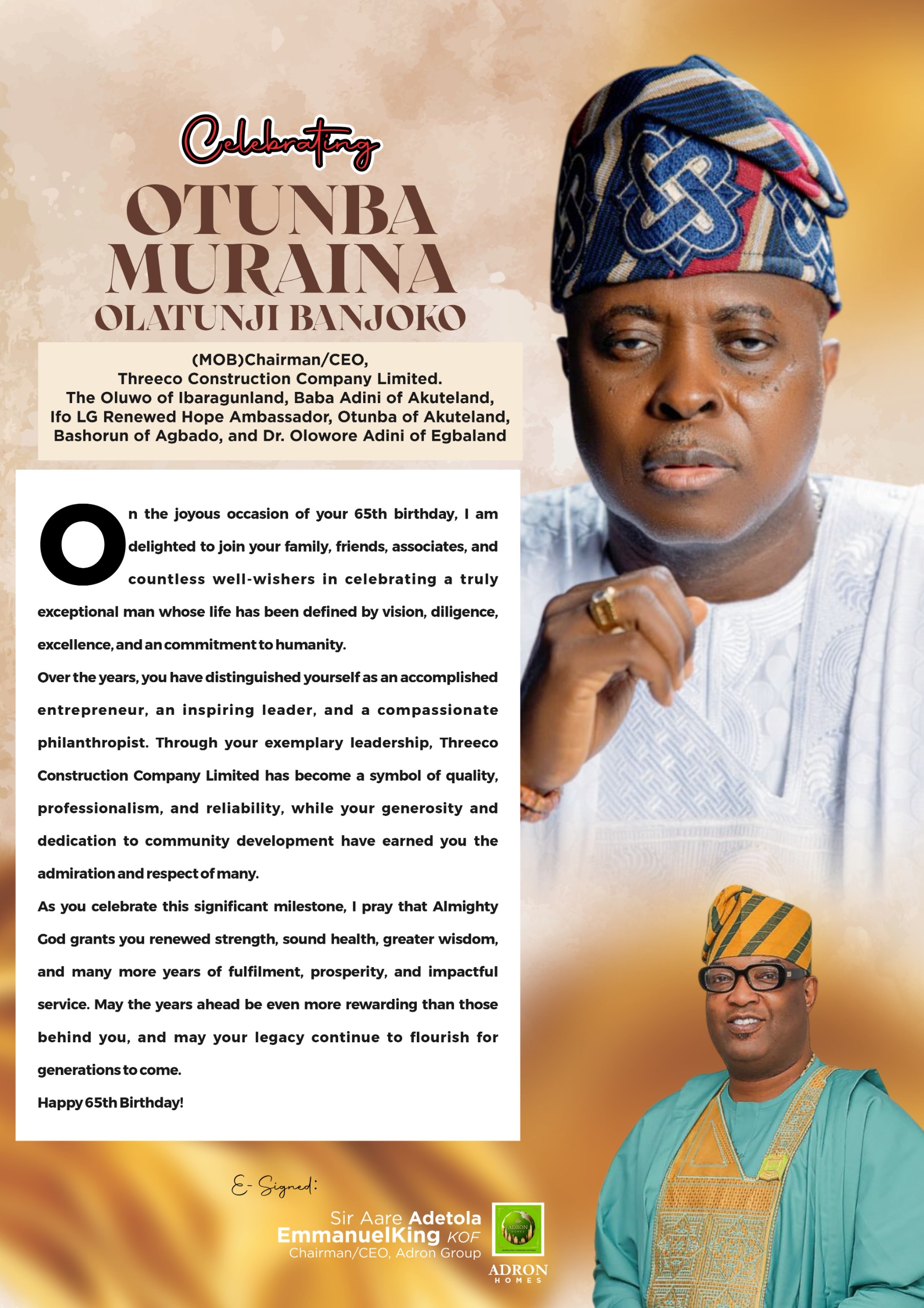
Adron Group Chairman Celebrates Business Icon Otunba Muraina Banjoko at 65 (more…)
News
Aare Adetola Emmanuelking Hails Prof. Abayomi Arigbabu’s Impact on Education as He Marks Birthday
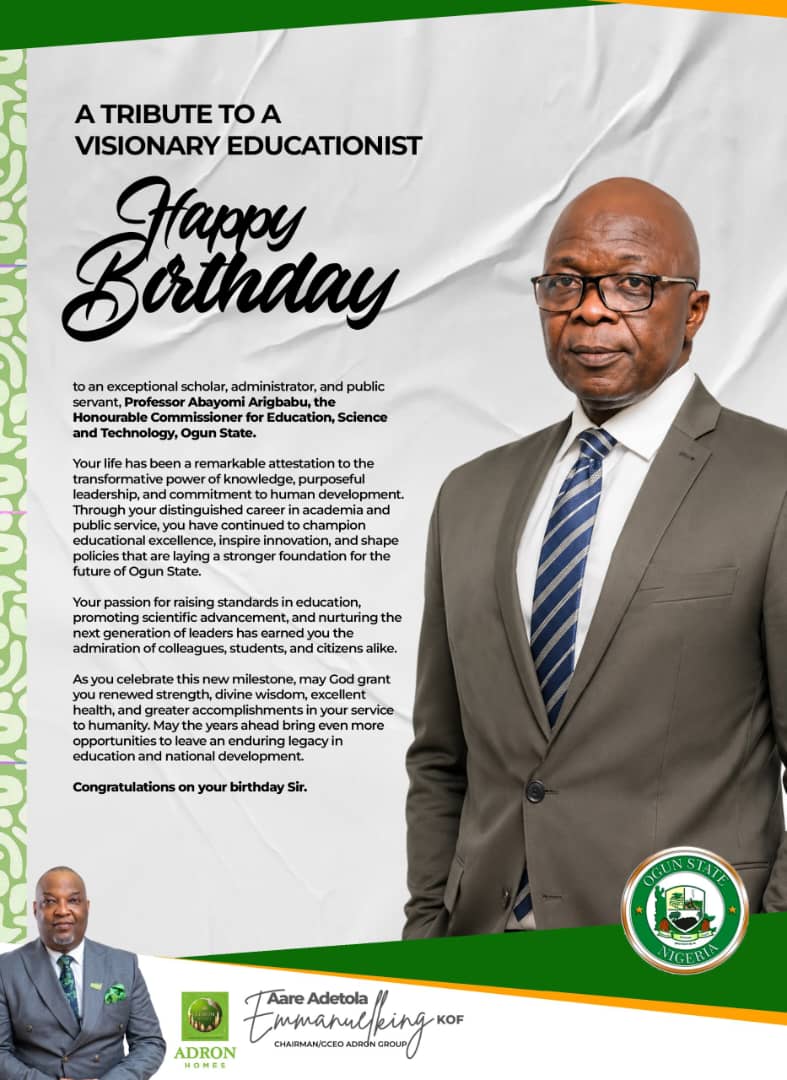
Aare Adetola Emmanuelking Hails Prof. Abayomi Arigbabu’s Impact on Education as He Marks Birthday
The Chairman/GCEO of Adron Group, Aare Adetola Emmanuelking, has paid glowing tribute to the Honourable Commissioner for Education, Science and Technology, Ogun State, Professor Abayomi Arigbabu, describing him as one of the foremost architects of educational transformation whose leadership continues to redefine learning and human capital development in the Gateway State.
In a heartfelt birthday message, the renowned real estate entrepreneur commended Professor Arigbabu for his exceptional blend of scholarship, administrative excellence, and visionary public service, noting that his stewardship of the education sector has continued to inspire confidence in the future of education in Ogun State.
According to Aare Adetola Emmanuelking, Professor Arigbabu has distinguished himself as an education reformer whose policies and programmes have consistently advanced academic excellence, strengthened institutional standards, promoted innovation, and positioned education as a strategic driver of sustainable development.
“Professor Abayomi Arigbabu exemplifies the ideals of visionary leadership. His dedication to improving educational outcomes and empowering the next generation through quality learning continues to leave an indelible mark on Ogun State and Nigeria as a whole. His legacy is one of impact, excellence, and selfless service,” he stated.
The Adron Group Chairman further acknowledged the Commissioner’s commitment to building an education system that equips young people with the knowledge, skills, and values required to thrive in an increasingly dynamic world, describing his contributions as invaluable to the state’s development agenda.
As Professor Arigbabu marks another year, Aare Adetola Emmanuelking prayed for renewed strength, divine wisdom, robust health, and greater accomplishments, expressing confidence that the celebrant’s passion for educational advancement would continue to shape lives and inspire generations.
He wished the Commissioner a memorable birthday celebration and many more years of impactful service to Ogun State, Nigeria, and humanity.
News
RSS Makes History as Graduating Class of 2026 Marks Valedictory Service in First-of-Its-Kind University-Style Ceremony
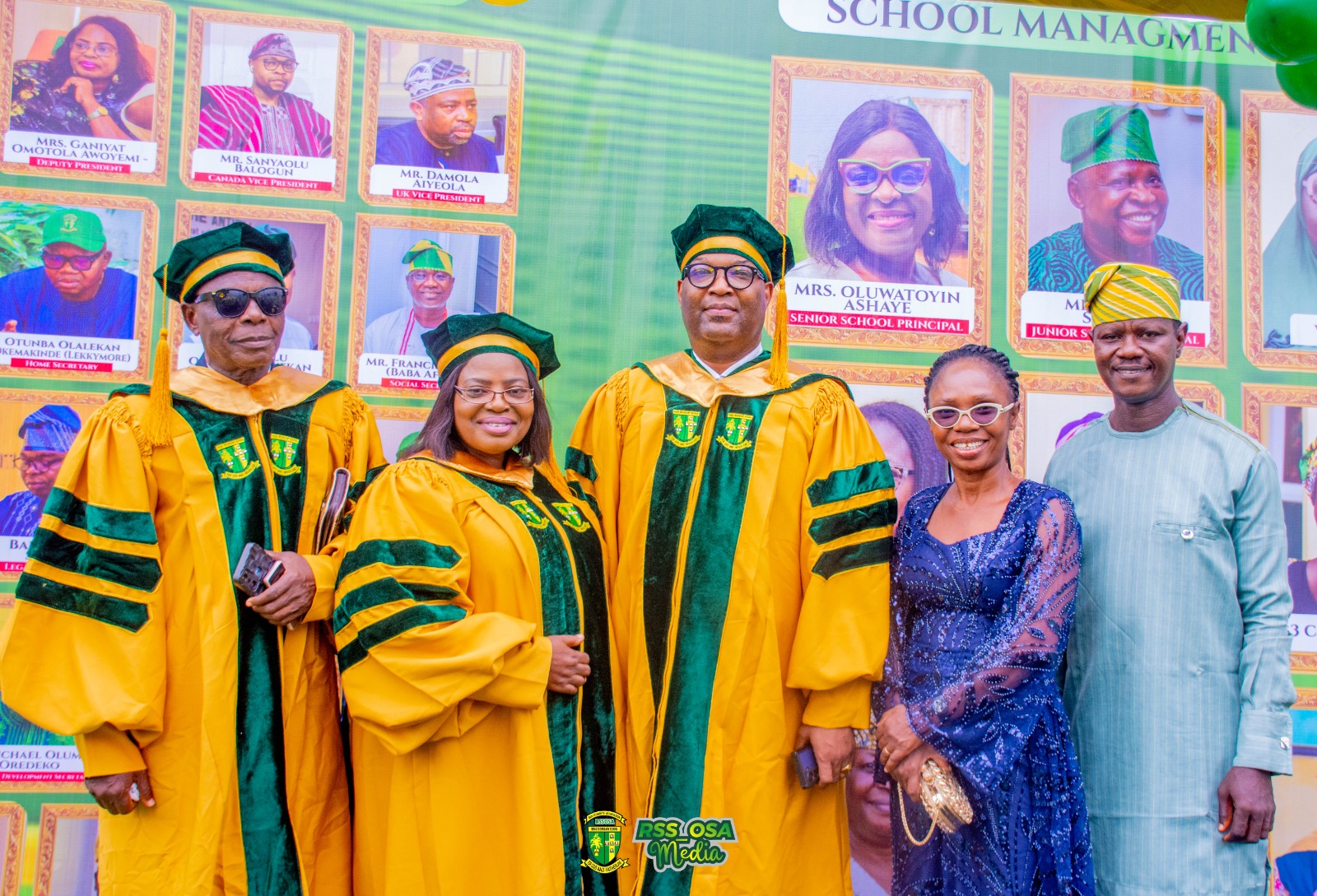
RSS Makes History as Graduating Class of 2026 Marks Valedictory Service in First-of-Its-Kind University-Style Ceremony
Remo Secondary School (RSS) has made history with the graduation of its 2026 class in what is being described as a groundbreaking academic ceremony, as the prestigious public secondary school celebrated its graduating students in a university-themed graduation style.
The historic valedictory service, which brought together students, parents, teachers, school administrators, old students and distinguished guests, was marked by pomp, pageantry and an atmosphere of academic excellence, as graduating students appeared in full academic graduation gowns, caps and other traditional graduation regalia.
In a striking departure from conventional valedictory ceremonies typically held in public secondary schools, the school’s principals and teachers, as well as the National Executives of the Remo Secondary School Old Students’ Association (RSSOSA), also donned academic gowns, creating the atmosphere and grandeur of a university convocation.
The remarkable initiative transformed the valedictory service into a memorable graduation experience for the students and marked a significant milestone in the history of Remo Secondary School, Ogun State and, potentially, the Nigerian public school system.
The ceremony was not only a celebration of the completion of secondary education, but also a deliberate effort to instil in the graduating students a sense of pride, achievement and responsibility as they prepare to transition into higher education and the next phase of their lives.
Another major highlight of the ceremony was the presentation of awards to deserving students in recognition of outstanding morals, good character and exemplary conduct. The awards, which cut across various categories, celebrated students who distinguished themselves not only through academic pursuits, but also through positive character traits, discipline, responsibility and good morals.
In a further demonstration of its commitment to the future of the graduating students and the advancement of education, Hope Bridge Social Impact Foundation awarded full higher education scholarships to about 25 deserving students. The scholarship awards will support the beneficiaries in pursuing their tertiary education, providing them with an opportunity to further their academic aspirations and achieve their full potential.
Speaking at the ceremony, the President of the Remo Secondary School Old Students’ Association (RSSOSA), Sir Aare Adetola Emmanuelking KOF, congratulated the graduating class and commended the school management, teachers and parents for their roles in nurturing and guiding the students throughout their academic journey.
He further expressed appreciation to the Ogun State Government, ably led by the Executive Governor, His Excellency, Prince Dapo Abiodun, MFR, CON, for his administration’s commitment to transforming the education sector in the state.
He specifically acknowledged the Governor’s Yellow Revolution initiative, describing it as one of the notable interventions that has positively impacted the education sector and contributed to creating a more conducive environment for learning across public schools in Ogun State.
According to him, the Governor’s keen attention to education and the deliberate interventions of his administration have had a positive ripple effect that has extended to institutions such as Remo Secondary School, contributing to the school’s continued growth and development and helping to position it as a great institution.
Aare Adetola Emmanuelking also extended his appreciation to the Ogun State Commissioner for Education, Science and Technology, Prof. Abayomi Arigbabu, for his leadership and evident contributions to the advancement of education in the state.
The event further highlighted the strong bond between the school and its old students, with the presence and participation of the old students, demonstrating the association’s continued commitment to the development and advancement of the institution.
The innovative university-style graduation ceremony is expected to remain one of the most memorable moments in the history of the school, and could set a new standard for how graduating students are celebrated in public secondary schools across Ogun State and beyond.
For the graduating class of 2026, the occasion was a day of pride, gratitude and celebration, a day when they were not only bid farewell from secondary school, but were honoured and celebrated as graduates stepping confidently into the future.

-
 Real Estate Achievers Awards1 year ago
Real Estate Achievers Awards and Exhibition 2025
-

 Mortgage finance1 year ago
Comparing Nigerian Mortgage Structures to Global Standards mortgage
-

 News1 year ago
RERAPAN Celebrates Babatunde Adeyemo at 46
-
 Interviews2 years ago
Google hit with record EU fine over Shopping service
-
 Opinion2 years ago
All you need to know about penalty shootouts
-
News1 year ago
Real Estate Achievers Awards and Exhibition 2025 (REAA)
-
 Real Estate insurance2 years ago
The full story of Thailand’s extraordinary cave rescue
-

 Mortgage finance1 year ago
FG to seize mortgaged property of retirees over unpaid housing loans